Japan Is Turning an Airport Into Pokémon — and the Reason Is Bigger Than Tourism

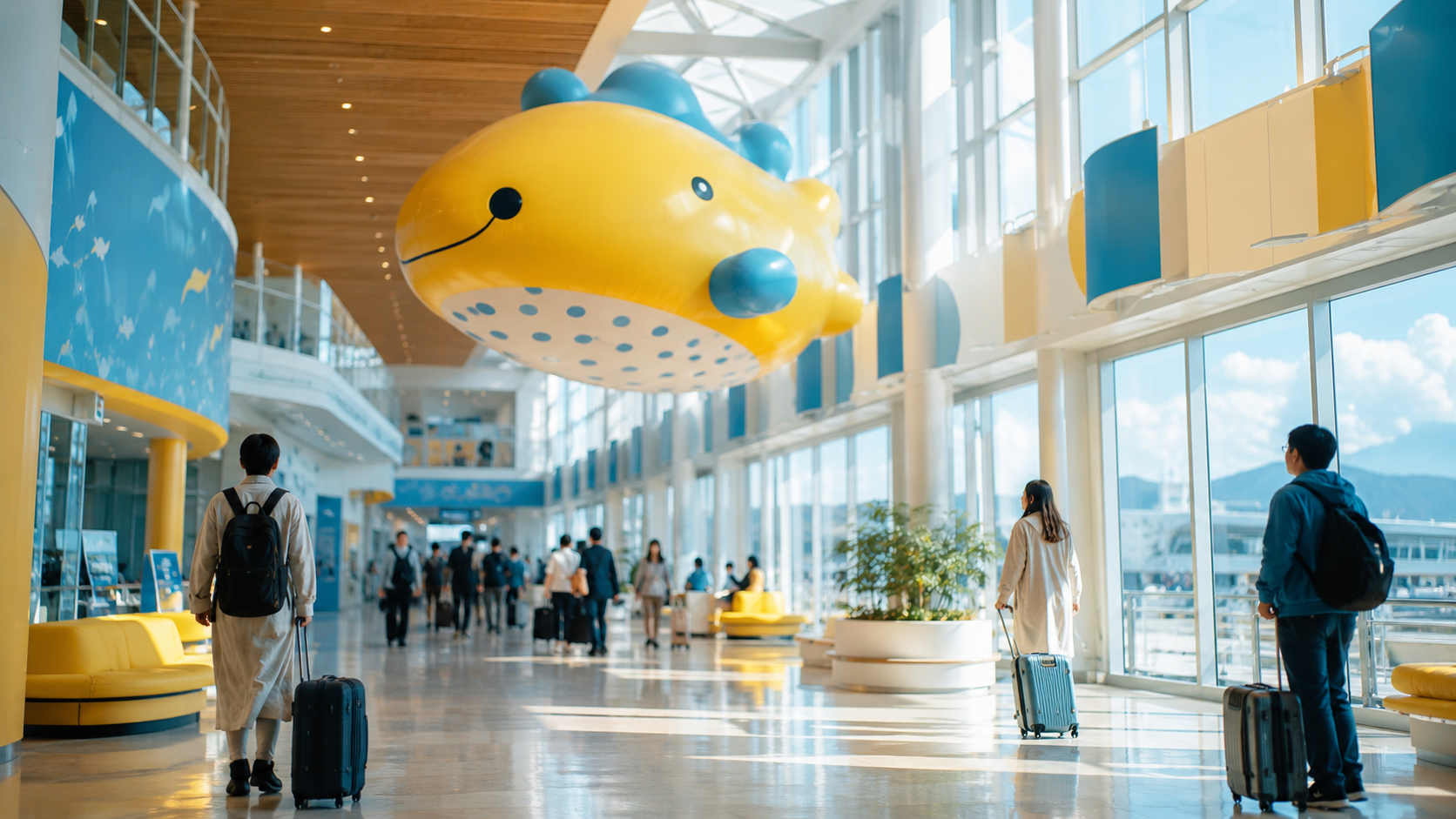
On July 7, a small regional airport on Japan's Noto Peninsula reopens with a new name: the Noto Satoyama Pokémon With You Airport. The headlines are going to focus on the obvious stuff — a giant Pikachu blimp in the atrium, every wall covered in Flying-type Pokémon, themed buses with Psyduck on the side. And that stuff is real and it's great. But if you stop at "cute airport," you miss the actually interesting story, which is this: Pokémon isn't decorating a building here. It's being used as disaster-recovery infrastructure. And no other entertainment property on Earth operates this way.
The part that isn't about Pokémon at all
The Noto Peninsula got hit by a major earthquake on New Year's Day 2024. The damage across the region was severe, and recovery has been slow — the kind of slow where the bigger long-term threat isn't the rebuilding itself, it's everyone leaving and the tourists never coming back. A region that empties out after a disaster doesn't recover. It just fades.
This airport project is a direct response to that. It's backed by Ishikawa Prefecture and run through the Pokémon With You Foundation — a non-profit The Pokémon Company set up all the way back after the 2011 Tōhoku earthquake and tsunami. For over a decade, that foundation's entire job has been pointing the Pokémon brand at disaster-hit communities to pull visitors and attention back to places that need it. The airport is its biggest single project ever, and it's scheduled to run all the way through September 2029. That's not a marketing pop-up. That's a four-year regional development commitment with Pikachu as the front man.
What's actually in there
Okay, but you came here for the Pokémon part, so: it's a lot.
All 111 Flying-type Pokémon are placed throughout the terminal — gates, signage, walls, entrances — which is the kind of completionist detail that's clearly designed by people who know exactly who their audience is. A Pikachu balloon built to look like an aircraft floats in the central atrium. The observation deck is dressed up as a miniature countryside scene stuffed with Pikachu figures and hidden Pokémon for people to spot. There's themed dining, location-exclusive merchandise, and — the detail I find genuinely clever — a smartphone-based animated series made specifically for the airport. One episode follows a Bagon trying to learn to fly while training under a Salamence monument that's physically in the building. You watch the short, then you walk over and stand at the thing from the short. That's a smart loop.
Two recurring pieces of original art tie it together. One, "Akarui Mirai" — "Bright Future" — was created to support post-quake rebuilding and now greets arrivals, flanked by 3D installations of Pikachu, Plusle, and Minun. Another, "Sky of Hope," runs across the signage, the merch, and the Pokémon-wrapped sightseeing buses that fan out from the airport to spots around the peninsula, including a themed footbath with Water-types worked into the design. The whole thing is built to push visitors out of the airport and into the region, which is the actual point.
Why this matters more than it looks
Here's the thing worth sitting with. Think about the biggest entertainment IPs on the planet — Disney, Marvel, Star Wars, Nintendo's own first-party games. Now try to name another one that a government partners with to economically resuscitate an earthquake zone. You can't, really. Disney builds parks to extract money from a region. Pokémon, in this specific program, is being deployed to put money back into one. That's a fundamentally different relationship between an IP and a place.
This is the part of Pokémon's footprint that people outside Japan consistently underrate. We tend to see it as a card game, a kids' franchise, a nostalgia engine, a speculative asset. In Japan it's closer to soft civic infrastructure — something stable and beloved enough that a prefecture can build a multi-year recovery strategy around it and trust that it'll actually pull people in. There's a reason the foundation has been doing this since 2011 and not just doing one-off charity drives. It works because the brand is that deep.
The hobby angle, for those keeping score
For collectors and resellers specifically, file the phrase "location-exclusive merchandise" and watch it. Japan-exclusive, venue-exclusive Pokémon items have a long history of becoming secondary-market targets the moment they exist, and an airport that operates as a destination for over four years is going to generate a steady stream of them. If past venue-exclusive drops are any guide — and they always are — expect this material to show up on Mercari Japan and proxy services fast, with the usual markup. Whether any of it becomes genuinely sought-after depends on print runs nobody's disclosed yet, but "exclusive item only obtainable by physically going to one airport in Ishikawa" is exactly the kind of scarcity story this hobby reliably turns into a flip. Not financial advice, just pattern recognition.
The takeaway
It's easy to read this as Japan being whimsical, and sure, partly it is. But the more accurate read is that "gotta catch 'em all" has quietly turned into a tool a government can use to keep a wounded region from disappearing. The Pikachu blimp is the photo. The four-year recovery commitment behind it is the actual news. Pokémon stopped being just an IP a long time ago — this airport is just the clearest proof yet that somewhere along the way it became something closer to public works with a mascot.