There Are Two LEGO Poké Balls. Only One of Them Is the Exciting One

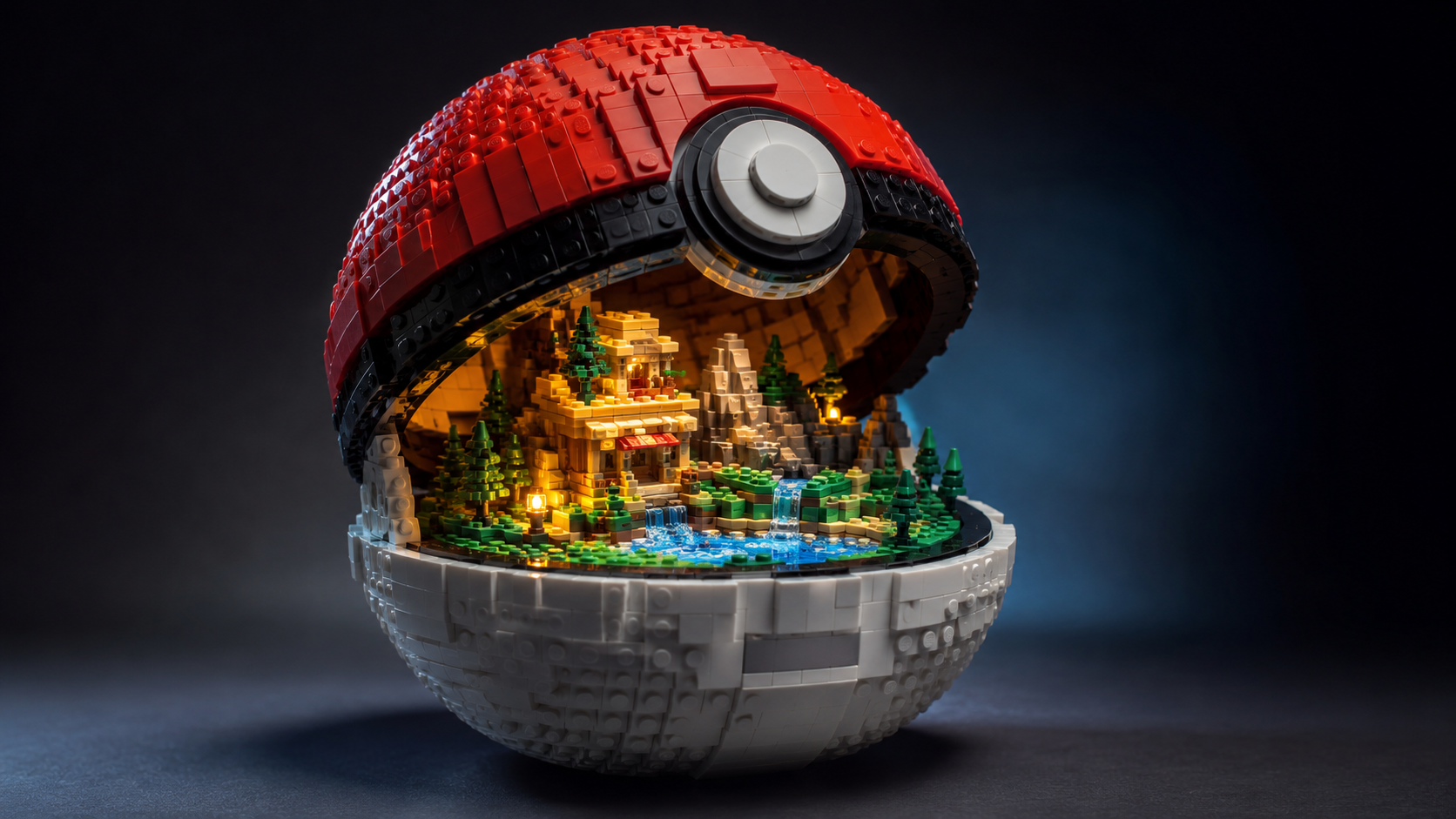
If you've gone looking for "the LEGO Poké Ball," you've probably hit a wall of confusion — and it's not your fault. There are actually two of them. One you can already own. One is still a leak. And the one everybody's actually buzzing about is the one you can't have yet. Most of the coverage out there smears these together into one blurry "LEGO Poké Ball" blob, so let's untangle it properly, because the difference matters — especially if you care about the collector side.
First, the part that's genuinely historic
For thirty years, Pokémon construction toys meant one thing: Mega Bloks, later Mega Construx, made by Mattel. LEGO and Pokémon never happened. It was one of those weird, permanent-feeling absences in the toy world — the biggest building-brick brand and the biggest entertainment franchise on the planet, and they'd just… never touched.
That ended. LEGO reclaimed the Pokémon license, and on January 12, 2026, the LEGO Group and The Pokémon Company International officially announced the first-ever LEGO Pokémon sets. After three decades, this is a real, structural shift in the toy aisle — not a one-off crossover, but the start of what's shaping up to be a very large theme.
The Poké Ball you can actually buy: set 72152
The confirmed, on-shelves one is LEGO Pokémon "Pikachu and Poké Ball," set 72152.
It launched February 27, 2026 (pre-orders opened alongside the January announcement). It's a roughly 2,050-piece, adult-targeted display build, and the design recreates the iconic image of Pikachu mid-leap, bursting out of an opening Poké Ball. It sits on a black, lightning-bolt-shaped base, and there's a tidy easter egg: a "25" on the base, Pikachu's Pokédex number. MSRP is $199.99 USD (£179.99 / €199.99).
It came out as part of a launch trio: the small Eevee set (72151, ~587 pieces, $59.99), this Pikachu and Poké Ball set (72152, $199.99), and the absolute monster Venusaur, Charizard and Blastoise set (72153, ~6,838 pieces, $649.99). Early buyers of the big Kanto-starters set got a gift-with-purchase: a 312-piece Kanto Region Badge Collection displaying all eight gym badges, available only on purchases in a narrow late-February window.
So when someone says "the LEGO Poké Ball is out," this is the one they mean. It's a display piece. It's a static Pikachu-and-ball sculpture. It's nice. It is not the one the LEGO community is actually losing its mind over.
The Poké Ball worth waiting for: the leaked set 72154
Here's the one generating the real noise — and the important caveat up front: as of right now this is leak and rumor, not officially confirmed by LEGO. Treat every number here as "reported," not "final."
Reliable LEGO leakers have described a separate set, numbered 72154 and reportedly named simply Poké Ball. The reported specs: somewhere around 2,239–2,339 pieces, roughly $259.99 / €259.99, with a release pegged at August 1, 2026.
The reason this one matters isn't the size or the price. It's the structure. Leakers describe a large buildable Poké Ball that actually opens up to reveal an interior diorama — a scene built inside the ball itself. And the detail that pushed it over the top for a lot of people: it's rumored to include molded Pokémon minifigures, made the standard LEGO minifigure way rather than the buildable-figure route LEGO used for Mario. If accurate, this would be the first LEGO Pokémon set with proper minifigures, which for a lot of collectors is the thing they've actually been waiting for. There's also some analysis floating around tying the August Pokémon wave to LEGO's new interactive "SMART Brick" technology, but that's firmly in the speculation column for now.
Bottom line on 72154: an opening Poké Ball with a hidden scene and catchable minifigures inside it is a concept, where the current set is a statue. That's why this is the one to watch. Expect official confirmation to land closer to the rumored August window, since LEGO typically reveals summer sets a month or two out.
The collector and reseller read
This is the part worth thinking about if you operate on the resale side of the hobby rather than just the building side.
A few dynamics line up here in the textbook way. LEGO sets historically develop a strong secondary market once they retire, and licensed sets in particular tend to age well. This is a debut wave of a brand-new, 30-years-in-the-making license — exactly the kind of "first-ever" status that collectors attach significance to later. And LEGO leaned on the oldest lever in the playbook: a limited gift-with-purchase (the Kanto Badge Collection) gated to a tiny purchase window. GWPs that can't be bought separately are reliably some of the first items to command a premium once the window closes.
None of that is a recommendation to go deep — debut hype and eventual retired-set value are two very different timelines, and a $200–$650 cost basis is a lot of capital to park on a maybe. But if you're tracking this category, the signals to actually watch are: the retirement date on the launch trio (value moves there, not at launch), the resale behavior of the Kanto Badge GWP (an early read on demand intensity), and whether 72154 ships with genuinely exclusive minifigures (minifig exclusivity is one of the more durable LEGO value drivers). That's the pattern-recognition version. Anyone telling you a still-in-stores set is already a guaranteed flip is selling you something.
The takeaway
The clean way to hold all this in your head: the LEGO Poké Ball you can buy today (72152) is a confirmed, $199.99 display sculpture of Pikachu leaping out of a ball. The LEGO Poké Ball worth being excited about (72154) is a leaked, unconfirmed, ~$260 set that reportedly opens into a diorama with minifigures inside, targeting August. One is real and fine. One is rumored and genuinely cool. Don't let the internet's habit of blending them into a single "LEGO Poké Ball" cost you the actual story — which is that after thirty years, this partnership is finally real, and LEGO is clearly not treating it as a small experiment.